
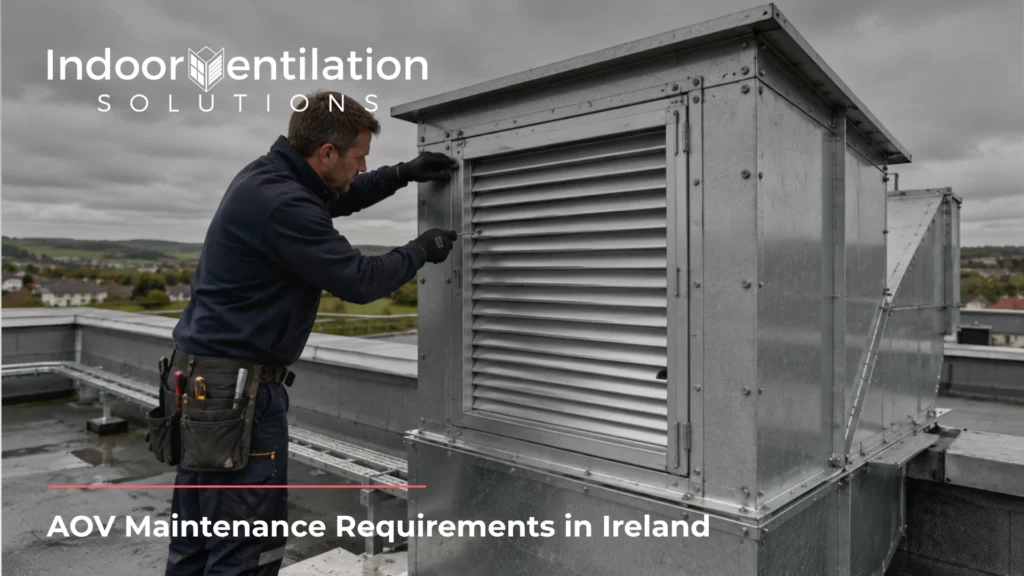
AOV maintenance in Ireland is shaped by EN 12101 and TGD B, though neither prescribes a fixed servicing calendar. There’s no line in Irish regulation that tells you to test an automatic opening vent every second Tuesday, and no Irish statute that mirrors the UK’s neat weekly-monthly-annual structure.
That gap between “no fixed schedule” and “no obligation” is exactly where most buildings get this wrong, and it decides whether your maintenance plan actually holds up, or just looks like one.
How Often Should an AOV Be Serviced?
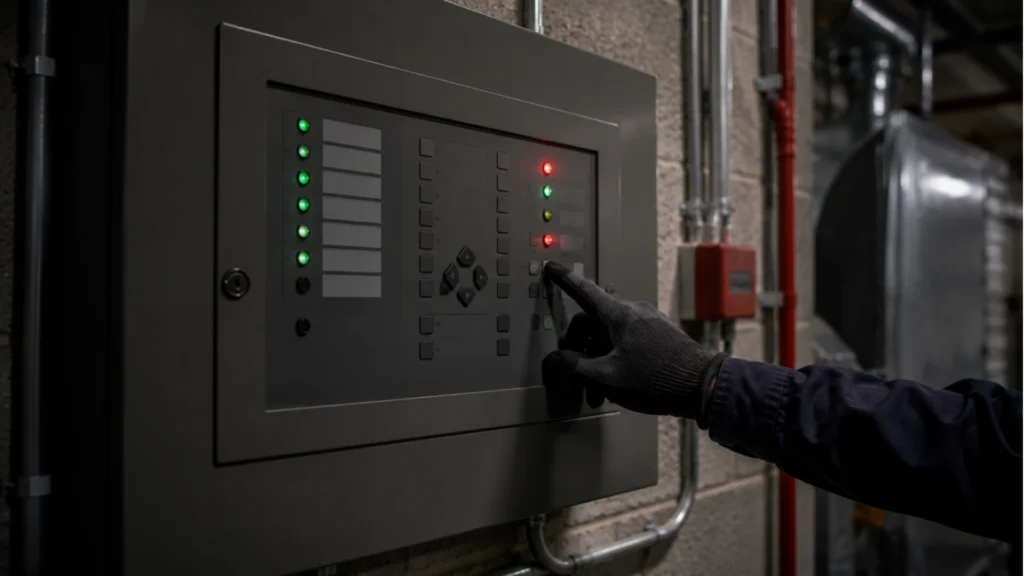
Irish government guidance sets out a layered testing pattern for smoke control systems, including AOVs: weekly simulated actuation checks, periodic all-zone tests (typically quarterly), and a full annual test repeating the original acceptance procedure.
No Irish regulation fixes AOV servicing to a single named interval, but this cadence, set out in the Department of Housing, Local Government and Heritage’s Fire Safety Guide for Building Owners and Operators, is the closest thing to an official Irish benchmark.
The reasoning holds up on its own merits. Actuators wear. Battery backup degrades. Debris collects around vent seals and hinges without anyone noticing until the system is triggered and doesn’t open, at the one moment someone in that stairwell is counting on it to.
An annual service catches that failure before it turns into a life safety one. Waiting for a fire to find out is not a testing strategy.
Does BS 7346-8 Apply to AOV Maintenance in Ireland?
No. A lot of Irish-facing guidance gets this wrong. BS 7346-8 is a UK code of practice for planning, installing and maintaining smoke control systems. It sits alongside the Regulatory Reform (Fire Safety) Order 2005, itself an English and Welsh instrument. Neither has any legal standing in Ireland.
That said, BS 7346-8 isn’t irrelevant here either: the Department of Housing, Local Government and Heritage’s own Fire Safety Guide for Building Owners and Operators references it, alongside the Smoke Control Association’s guidance, as technical reference material for smoke control system maintenance. It’s a useful technical resource without legal force here, and that distinction is what matters.
If a maintenance provider quotes BS 7346-8 or “the RRO” as the reason your AOV needs servicing on a specific legally mandated schedule, that’s the part that’s wrong.
A system certified once at installation and never checked again isn’t meeting that standard on day 400, even if nobody’s written down the exact date it stopped. That’s what actually applies here, and it’s more layered than a UK-style calendar.
TGD B, Section 6, sets out the design and performance basis for smoke control systems in Irish buildings, the strategy an AOV is installed to support. EN 12101 governs the product itself, the standard an automatic opening vent has to be tested and certified against before it’s fitted.
TGD B and EN 12101 don’t hand you a maintenance calendar, but together they set the standard a maintenance plan exists to keep meeting.
Is AOV Maintenance a Legal Requirement in Ireland?
Not in the way a lot of people expect. There’s no single clause in Irish law that names “AOV maintenance” as a standalone requirement with a fixed schedule attached. What exists instead is broader, and just as binding in practice.
Section 18(2) of the Fire Services Acts 1981 and 2003 places a legal duty on the person having control of a building to take reasonable measures to guard against fire and to keep fire safety measures in working order.
An AOV that’s part of a building’s smoke control strategy falls under that duty. Section 18(3) of the same Acts goes further, placing a duty on occupants themselves not to expose others to danger from fire through an act or an omission.
So the honest answer is that there’s no single named “AOV maintenance law,” but there is a clear, existing legal duty that a neglected AOV puts a building on the wrong side of.
What Does AOV Maintenance Actually Involve?
A proper AOV maintenance plan works in layers, not a single annual visit and nothing else.
| Frequency | What it covers |
| Weekly | Simulated actuation test, confirming the vent responds correctly and any fans or powered elements operate as expected. |
| Quarterly | All-zone test by a competent person, checking each detection zone and vent individually rather than relying on the weekly spot-check. |
| Annual | Full test against the original acceptance procedure, covering the complete system end to end, with a test certificate issued on completion. |
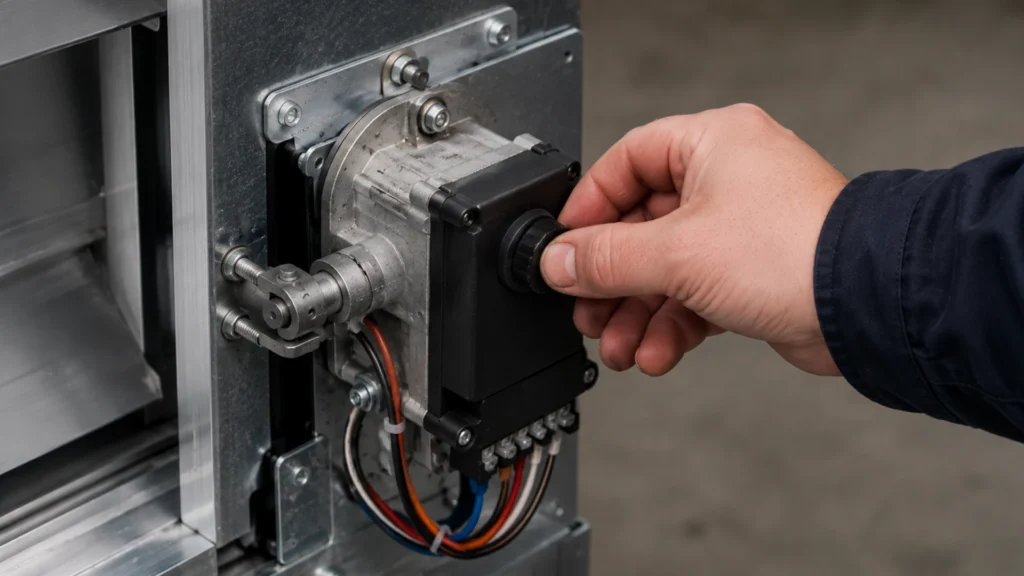
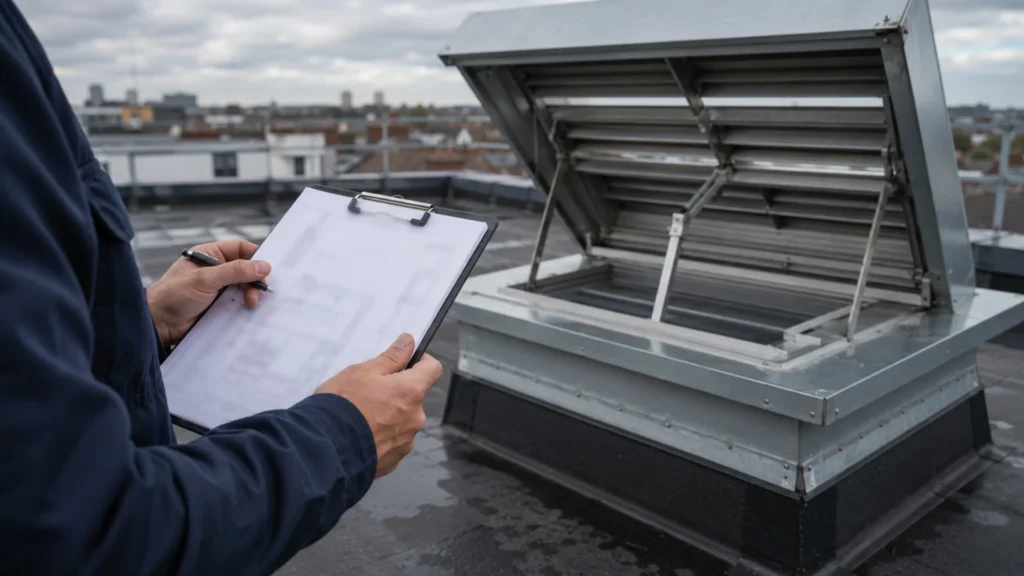
Most of the detail sits in the annual visit. A competent specialist checks that smoke detectors are still triggering the actuator correctly, that the control panel logs faults rather than masking them, and that the vent still achieves full opening under test conditions rather than a partial or sluggish response.
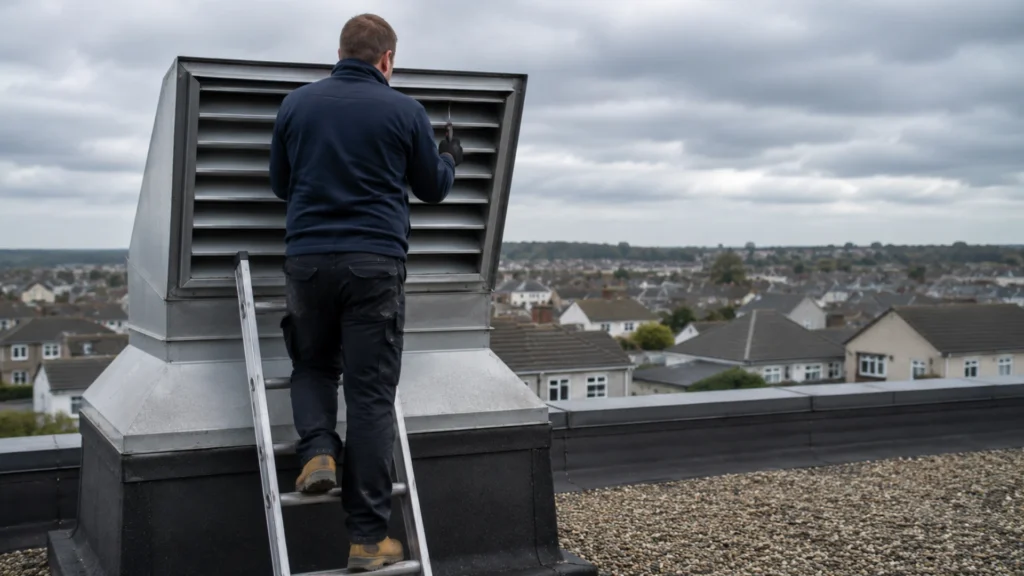
Weekly checks can reasonably sit with site staff who know the building. Quarterly and annual testing shouldn’t. That’s a job for a competent smoke control specialist, with experience that goes beyond a general facilities maintenance checklist.
Are Smoke Vents and AOVs the Same?
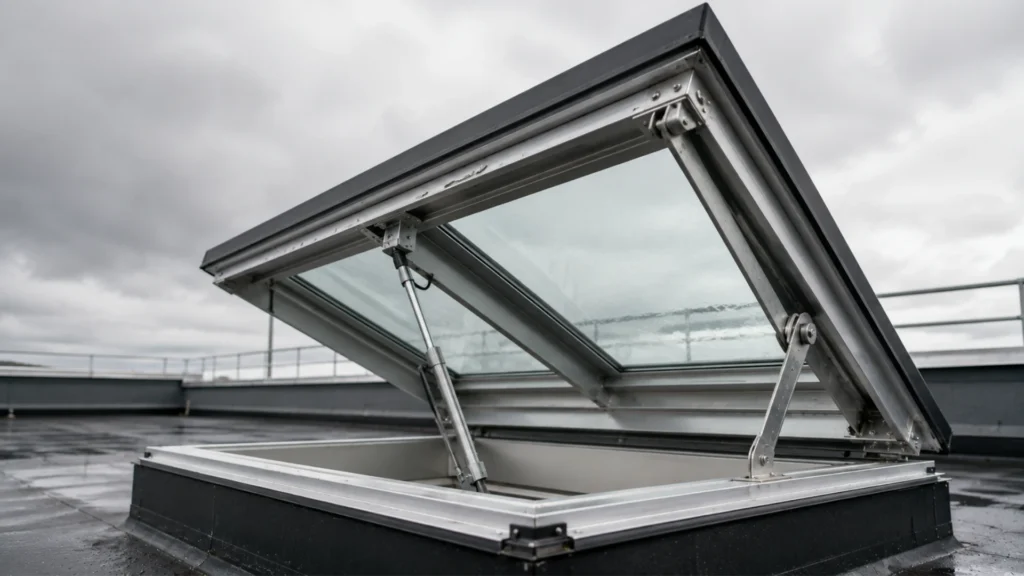
Close, but not quite interchangeable. An AOV, an automatic opening vent, is the actuated component itself: the window, rooflight or louvre that opens on a signal from a smoke or heat detector. “Smoke vent” is often used as a looser, general term for the same thing, and in most conversations the two labels get used to mean the same physical device.
Where it matters is at specification stage, where the distinction between AOVs, smoke dampers and shaft vents determines how a system is designed, not just what it’s called. We’ve covered AOVs, dampers and shaft vents in more detail separately, if you’re working through a specification and need the components explained properly.
Where Are AOVs Required in Irish Buildings?
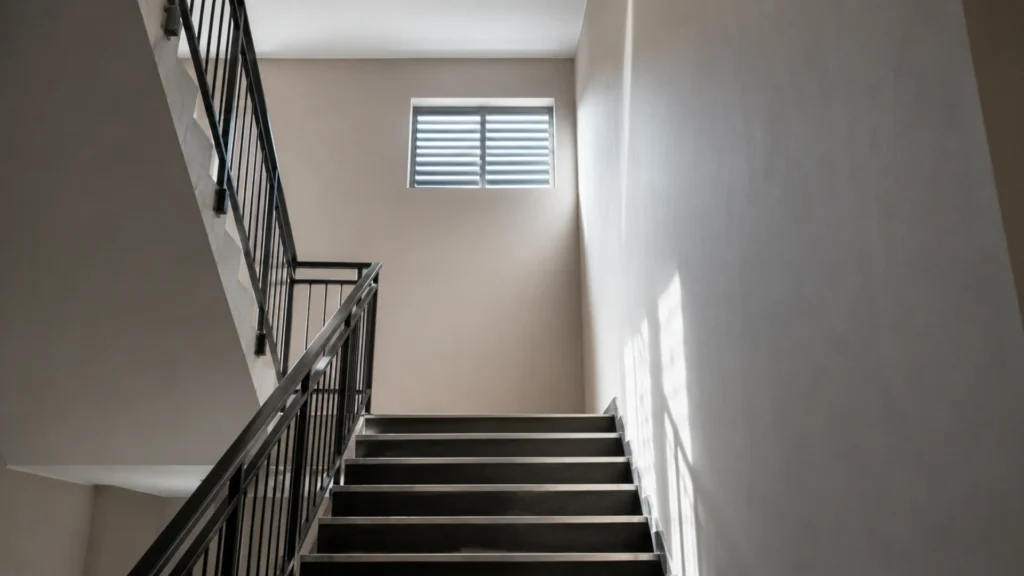
AOVs turn up wherever a fire strategy relies on keeping an escape route clear of smoke long enough for people to get out and firefighters to get in. That means stairwells, corridors, lobbies and atria most commonly, in both commercial and residential properties.
Multi-storey residential blocks and mixed-use developments lean on them heavily, particularly where a stairwell has to stay usable as the primary escape route for every floor above the fire.
Whether a given building needs AOVs, and how many, isn’t something to guess from a checklist. It comes out of the fire safety strategy for that specific building, agreed between the project engineer, the fire strategy consultant and the ventilation contractor at design stage.
Retrofitting that thinking after a building is occupied is far more disruptive than getting it right during specification.
Can an AOV Be Opened Manually?
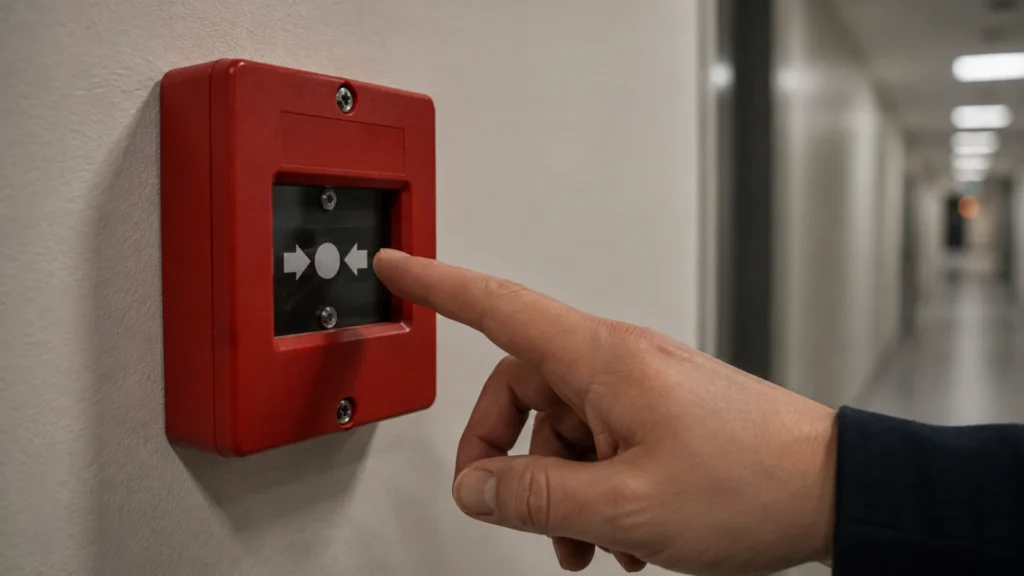
Yes. Most AOV systems include a manual override, usually a break-glass call point or a switch at the control panel, that lets someone open the vent without waiting for a detector to trigger it.
That’s there for testing, and in some designs it also supports smoke clearance after an event has been dealt with.
That override exists for testing and fire response, not day-to-day natural ventilation. Buildings that want manually operated window ventilation for comfort or air quality reasons need that specified as a separate function at design stage.
Who Should Carry Out AOV Maintenance in Ireland?
Day-to-day checks are a site responsibility. Whoever’s doing them needs a clear log and a working knowledge of what a fault indicator actually looks like. The annual service is different. Look for a competent smoke control specialist, not just a general fire safety qualification, someone who can speak to EN 12101 requirements without reaching for a UK standard instead.
If your last AOV service happened more than twelve months ago, or you’re not sure it ever happened at all, that’s worth resolving before it becomes a question a fire risk assessment asks for you, or worse, a question the system fails to answer during an actual fire.
A maintenance plan built around what TGD B and EN 12101 actually require, rather than a UK calendar that was never written for Irish buildings, is the difference between a system that’s technically installed and one you can rely on. See what a proper AOV maintenance plan looks like for your building.