
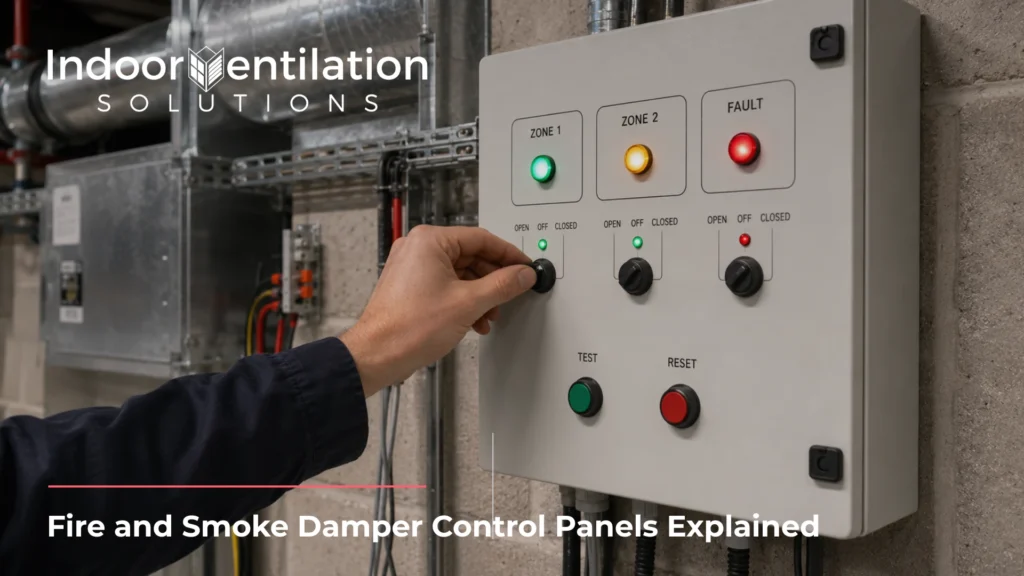
A fire and smoke damper control panel is the single point of control for every damper in a building’s fire strategy. That sounds simple enough. What most specifications never mention is that a panel can pass every commissioning test and still leave you exposed years later, because monitoring status and proving performance are two different things.
Most building owners get caught out there. Not at handover. Years in, when nobody has checked whether the panel is still doing its job.
What Does a Fire and Smoke Damper Control Panel Actually Do
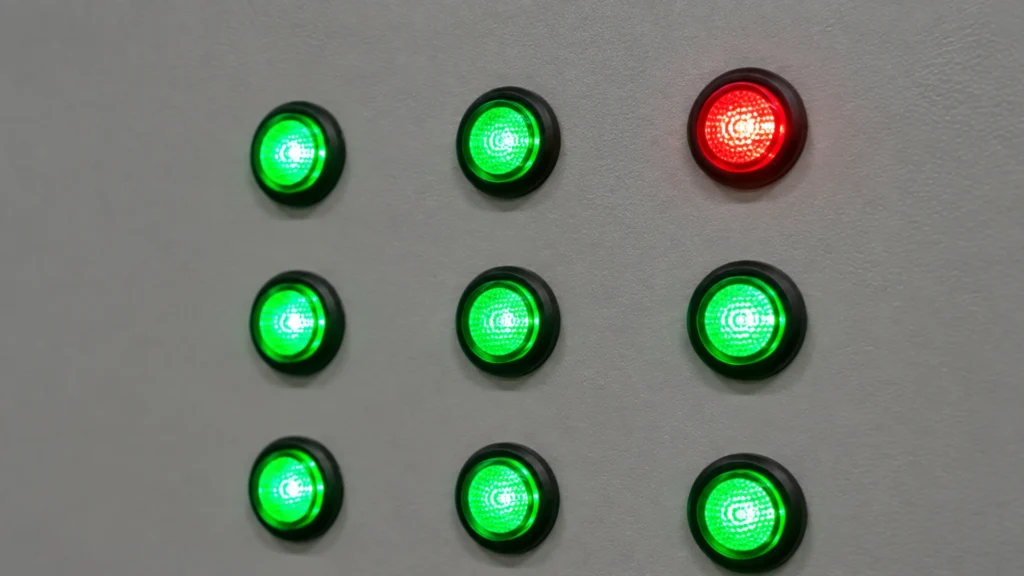
A fire and smoke damper control panel does four things. It monitors the open or closed position of every damper on the system, triggers automatic activation when smoke is detected, allows manual override by an authorised person, and logs the outcome so there’s a record of whether each damper actually closed.
The detail worth understanding is how each of those four functions actually holds up once a building’s been running for a few years.
Most fire dampers and smoke dampers operate on a fail-safe principle. If power or signal is lost, the damper moves to its closed position by default rather than staying open, and a properly monitored panel logs that fault the moment it happens rather than waiting for someone to notice.
This matters more as building size increases. A single damper on a domestic extract fan barely needs a panel. A commercial building with forty dampers spread across multiple fire compartments needs a control system that can tell facilities staff, at a glance, which ones are working and which ones aren’t.
How Does a Smoke Damper Control Panel Connect to a Fire Alarm
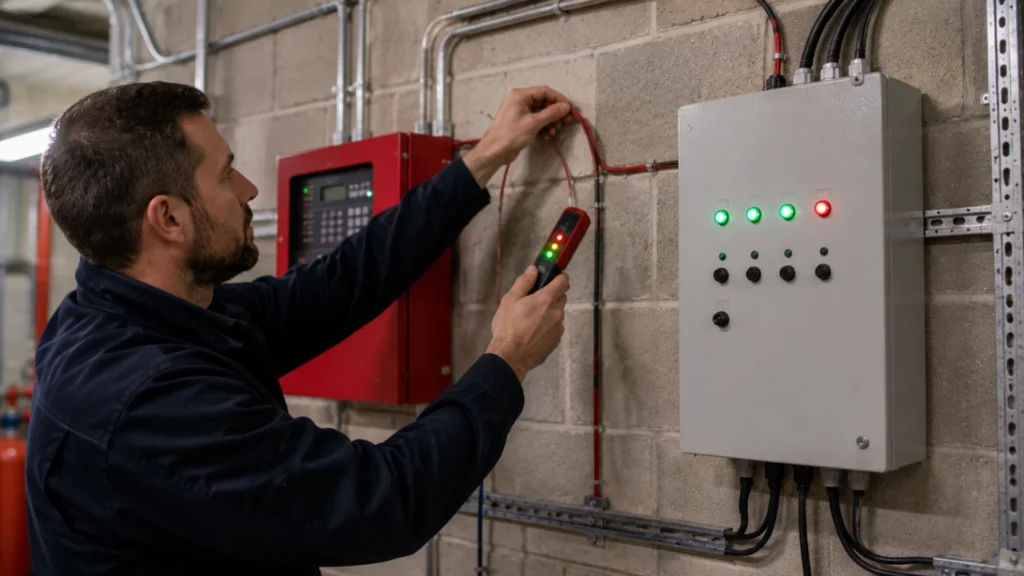
A control panel rarely operates in isolation. It sits between the smoke detectors, the fire alarm system and the dampers themselves, translating a detection signal into a physical response.
When smoke is detected in a duct or a protected space, the alarm system sends a signal to the panel. The panel then closes the relevant dampers, usually through a motorised actuator, while leaving unaffected zones open so the rest of the building’s ventilation continues to function normally. This selective response is what separates a proper smoke control strategy from a blunt instrument that shuts everything down at once.
The actuator is the part that does the physical work. It’s a small motor or spring mechanism that drives the damper blade from open to closed on receipt of a signal. Actuators fail eventually, usually through mechanical wear rather than electrical failure, which is one reason panels are built to flag a fault rather than assume silence means success.
Getting this connection right is a design decision, not an afterthought. The panel’s zone-by-zone logic, which dampers respond to which trigger, determines whether smoke actually clears the right escape route or just gets shuffled from one part of the building to another.
On larger sites, the panel often also reports into the building management system, giving facilities staff a single dashboard view of damper status alongside the rest of the building’s plant, rather than a standalone box nobody checks.
Difference Between a Containment Panel and an Engineered Smoke Control System
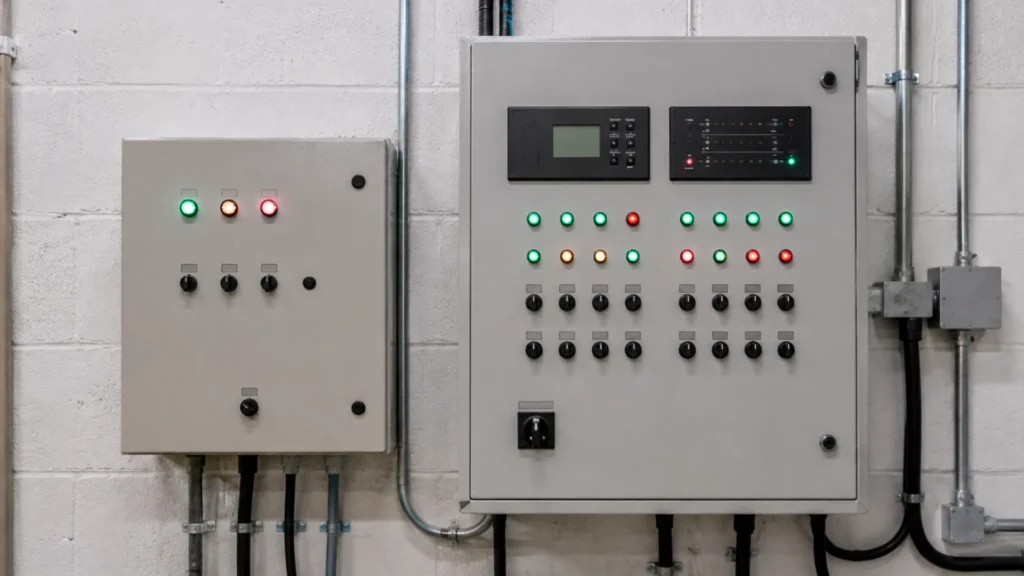
Not every panel is doing the same job. A basic containment panel monitors and activates dampers to stop the passage of fire and smoke between compartments. That’s compartmentation in its simplest form: keep the fire where it started for as long as the fire-resistance rating allows.
An engineered smoke control system does considerably more. It’s designed to actively remove smoke from a building, not just contain it, often working alongside mechanical extraction or natural ventilation to keep escape routes clear.
The control panel in an engineered system has to sequence multiple dampers, fans and vents together, responding differently depending on which zone triggered the alarm. If you’re not sure how these components, dampers, AOVs and shaft vents, are meant to work as one system, we’ve broken that down separately.
Get this distinction wrong at the specification stage and a containment panel installed where an engineered system was actually required will pass its individual damper tests and still fail to deliver a workable escape route in a real fire, the one moment a passed test on paper counts for nothing.
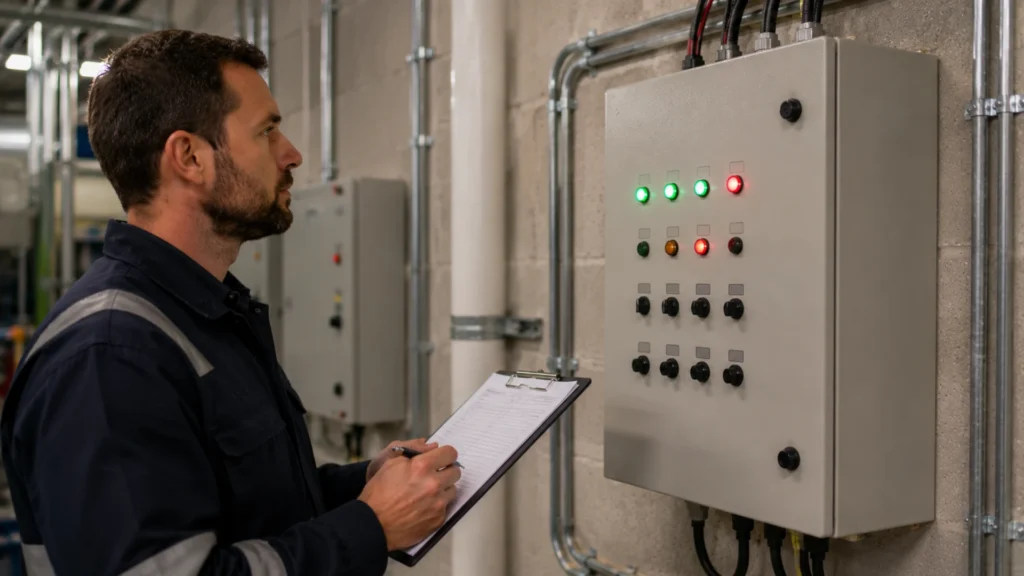
What Should You Check When Reviewing an Installed Panel
Commissioning is a snapshot, not a guarantee. If you’re a facilities manager or specifier reviewing an existing installation, here’s what’s worth confirming on an existing panel, not just taking the commissioning certificate at face value.
- Whether the panel’s fault log shows genuine periodic testing, not just a single commissioning entry from years ago
- Whether each damper’s closed position is being confirmed by an end switch, not assumed from the actuator signal alone
- Whether manual override still functions and is accessible to the people who’d need to use it
- Whether the panel’s zoning still matches the building, particularly after any refurbishment or change of use
- Whether access panels to the dampers themselves are genuinely reachable for testing, not blocked by later fit-out work
None of this shows up on a drawing. It only shows up when someone physically checks it, which is exactly why so many panels that look compliant on paper turn out to be running on assumption.

What Does Irish Law Actually Require for Panel Control and Monitoring
Technical Guidance Document B, the fire safety guidance under Ireland’s Building Regulations, sets out the fire safety measures a building needs, including the containment of fire and smoke to protect means of escape.
The specific product and installation standard governing smoke control dampers is I.S. EN 12101-8, which sets out requirements for the dampers themselves and how they’re controlled and monitored, including response times and fail-safe behaviour. Fire dampers, separately, fall under IS EN 15650 for product performance.
None of this is a claim that any single system is fully compliant on its own. Compliance depends on correct specification for the building in question, correct installation, and ongoing testing.
The standards treat monitoring and control as part of what makes this a system, not an optional add-on, which is worth knowing if a spec is ever trimmed down to save cost.
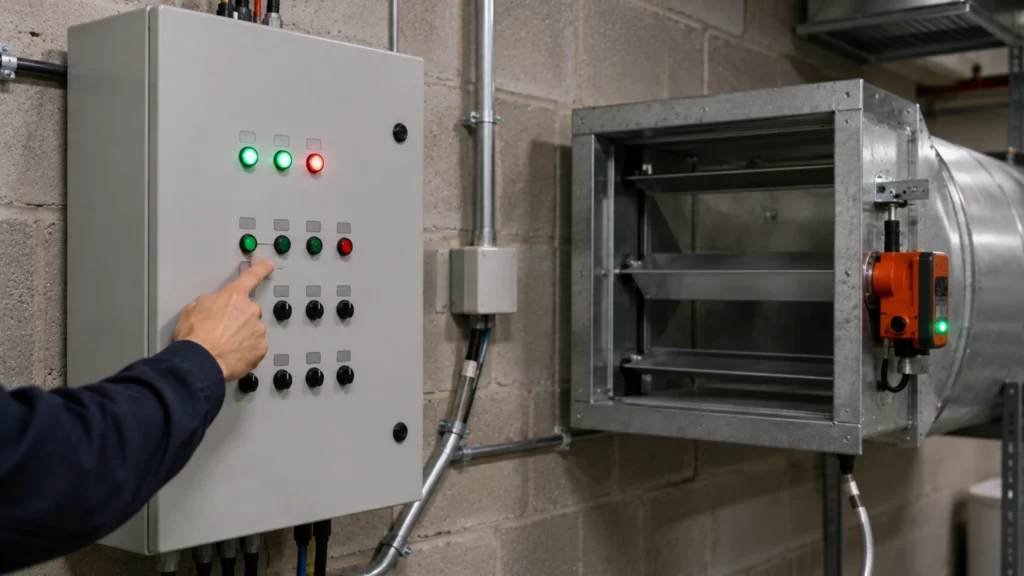
Why Does Smoke Damper Control Panel Testing Matter
Here’s the uncomfortable part. A damper that fails silently is worse than one that was never installed, because everyone in the building believes they’re protected when they’re not.
Fusible links melt at fixed temperatures and stop working correctly if they’ve corroded or been painted over during a refit. Actuators seize. End switches drift out of calibration.
None of this trips an alarm on its own. It only shows up during a proper functional test, where each damper is driven to its closed position and the panel is checked to confirm it registered correctly, not just that a signal was sent.
We’ve covered the practical side of this in detail, including what Irish law actually requires around frequency and documentation, in our guide to smoke damper testing. If your panel hasn’t been through a genuine functional test since commissioning, that’s the gap worth closing first, before anything else on this list.
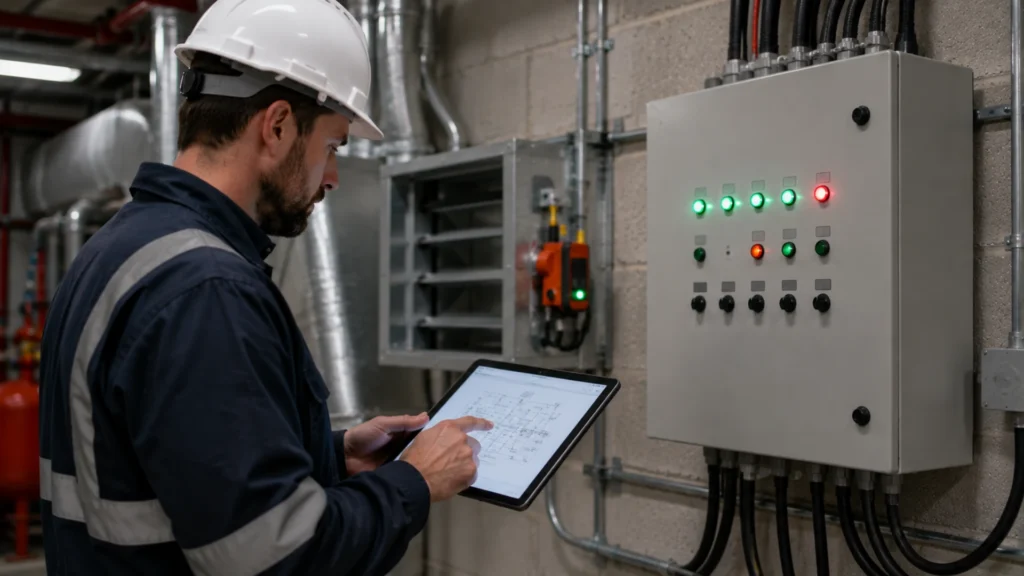
Get Your Control Panel Checked Properly
A control panel is only as good as the last time someone actually tested it. If you’re not sure when that last happened, or whether it’s even the right type of panel for your building, that’s a conversation worth having before it becomes a problem during an inspection or, worse, a fire.
We test, certify and maintain fire and smoke damper control systems across public sector, education and commercial buildings throughout Ireland, working to EN 12101 and Irish fire safety standards rather than assuming a UK spec sheet will do. Find out whether your panel is doing what it should be.